
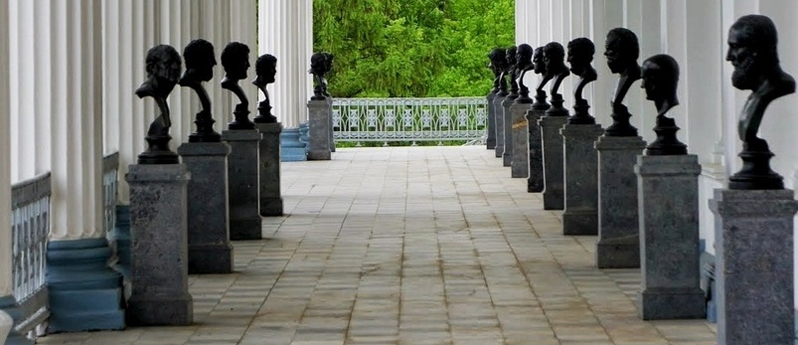
Corporate Zombies
Each law has its letter and its spirit. And each of us chooses what is closer to them (someone does it once and for all and someone does it every once in a while).
At the business level, the “letter” and the “spirit” are transformed into particular types of corporate structure, a mechanic and an organic one. The mechanism differs from the organism according to several key characteristics. It is created per a previously developed engineering design and is programmed to perform strictly limited functions – that is, it does not have a free will and a free choice, it cannot recover itself if broken or reproduce itself or develop itself (even artificial intelligence systems still do not have this function). Correspondingly, the organism has a completely opposite set of functions: it recovers itself, develops itself and makes a conscious choice of a scenario.
As a rule, a successful startup is a business rub by the energy of its enthusiastic founder(s). Basically, it is an economic body of its owners that lives according to organic nature laws. But as it grows up and its structure becomes more and more complex till it reaches the level of a sector-specific or a diversified corporation, the company gets bronze, stiffens and turns into a mechanism. Moreover, this process is the beginning of the end for a greater part of companies though others develop “non-organic” principles of business effective cooperation with the outer world.
On the “margin” of the column, I would like to dot that the majority of Ukrainian companies are just starting to stiffen. As for international corporations operating at the Ukrainian market, they have either gone through the process and stiffened in their monumenalism or they are trying very hard to overcome its consequences by rearranging their business processes of various scale and various depth, by Knowledge Management, by talent acquisition techniques, by career planning and personnel development, “ropes courses” and yoga breaks for their employees. Each fights against the irreversible damage of the system’s mobility with its growth as much as it can and as successfully as it can.
What does it mean for mechanical companies’ employees to be immersed into this kind of internal business medium and corporate culture? A pleasant angle is stability, status, limited responsibility for results. Because even a huge turbine at a power plant is only one of components. A difficult angle is a tremendous diversity of policies and procedures, a focus on the “letter” and not the “spirit”, a primacy of bureaucracy over human relations. It is congruent for someone to become an element of a beautiful and elegantly working mechanism because of their outlook and it is not for others. Someone belongs to the system and is firmly focused on the result; someone belongs to the team and for him or her the atmosphere of the group comes to the fore; someone is a freelancer and cannot breed in captivity. None of these is good or bad, they are just different people.
The main thing is to remain human and not to turn into corporate zombies. The world is not limited to glass-and-concrete offices or Grade II listed mansions of large corporations. And it is very harmful for one’s image to try to communicate with non-corporate surroundings with the help of polished officious phrases and steps of ritual dances, to put on a show of managerial Anglicism’s, to introduce icy coldness of officiousness or naïve Western manipulative techniques polished during various trainings into a friendly conversation.
Corporate hypocrisy and arrogance are not the best way to forge a reputation of a responsible person.
If you answer the letter containing a request to meet with “I will be able to attend to you on such and such day”, your further contact will hardly be productive.
The form “I think you will be interested to learn such and such and to meet such and such” will hardly stimulate an adequate person to act the way a requesting person wants them to.
Just like pompous harangues on ethical standards of Western journalism and Western public relations by “presstitutes” who don’t have an honest bone in their bodies.
And a feeling speech for an audience of experts about transnational companies saving the environment and protecting intellectual property will hardly be trusted unless flavored with self-mockery.
That is why it is against the basic instinct of self-preservation inherent in wildlife to get bronze together with your corporation, to catch its pathos and to take corporate culture values for your own. You shouldn’t lose hold of reality, critical thinking and healthy cynicism. The morning sun never lasts a day: corporations don’t last forever (at least, on particular territories as they tend to leave some countries under some circumstances), life-long recruitment isn’t fashionable. And one day any glossy transnational “top” can find himself/herself out of their comfortable office at the crossroads of seven biting winds of real life. In that situation, it is very bad to turn out to be a corporate zombie who is out of touch with reality.
And instead of the postscript. Like a transnational tycoon used to say in a fantasy novel, “An ideal employee of an intergalactic corporation is the one who cries with happiness when a corporate anthem is performed.” If you are at this stage, your employer deserves congratulations. If not, congratulations are all yours – you are still alive and recoverable.
http://forbes.net.ua/woman/1359119-korporativnye-zombi
Tags: Corporate culture Leadership Reputation Work