
To Be or to Seem to Be
Unexpectedly, I had to give a lot of masterclasses in reputation management for audiences that varied in their quality in the recent weeks (my schedule just happened to be like this). While I was building logical constructions I remembered a fundamental dilemma to be solved at an early stage of developing any reputational strategy, no matter whose strategy it is – the one of a public figure, of a political, a profit-making, or a non-governmental organization.
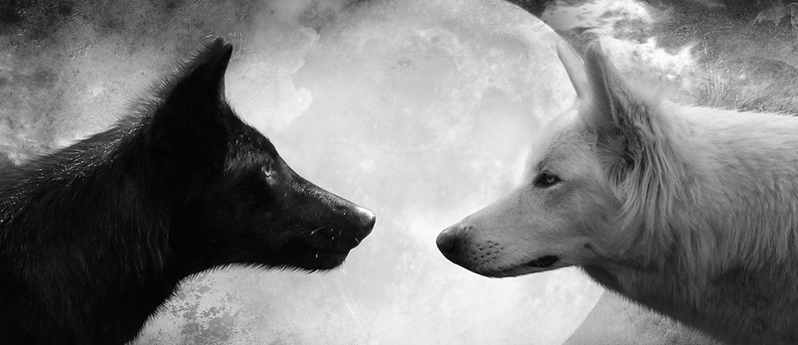
The gist of the problem is as simple as Hamlet’s question – to be or to seem to be?
“To be” in this context means to act as your heart and conscience dictate: to do bright things, good or bad ones, to say things that stimulate others to act, that is to change the world. At the same time, to understand that the information space will reflect them like a more or less crooked mirror but not to pay too much attention to the fact.
Correspondingly, “to seem to be” means to put the cart before the horse or to try and perfect the shadow of a tree without straightening the trunk and refining the crown. And to spare no effort to make not the objective (or subjective, should you be a follower of idealistic schools of philosophy) reality bend to you but its reflection and supplement – virtuality.
Saying that “to be” is always good and “to seem to be” is always bad would be a sin against the truth. There are many examples of people who prefer “being” but who are unhappy because they are poor or unheralded and there are many people who prefer “seeming” and who are happy rolling in money and getting the glory. Generally speaking, we choose a staircase leading to the skies ourselves and each of us will be rewarded according to their faith and their work in the eleventh hour.
But when we pose the dilemma in the public spotlight – with regard to public politicians – it acquires a social edge as it defines the present and the future image and standards of living of the whole society. A statement always does “being” – from this follows an ability to make unpopular and strategically necessary decisions and not to be afraid of consequences. A political clown (and their name is legion in the Ukrainian political elite) always does “seeming” – a big or a small bubble of insignificant words and pseudo-actions floating in the space due to the crowd’s short memory.
Congenital malformation of all political regimes that have left their mark in the history of independent Ukraine consists in none of them being existentially oriented. Backroom politics instead of public, directing the information space instead of the freedom of speech, virtuality instead of reality. The result is evident – we see it, we feel it, we bemoan it.
Yet life goes on. And the question what way our new authorities (new only in their form not in their substance, unfortunately) will choose still remains unanswered.
But why is it so disturbing (though at the same time professionally pleasant, I have to admit) for me to see the activities of “people in power” and candidates for elective offices in social networks or their presentations in the Google Drive and so on? Probably because the mechanisms of the ruling establishment’s functioning are the same and the haunches in the high-ranking armchairs also belong to “the former” or to “the revenge-seekers”. And “mainland Ukraine” is taking in refugees in the meanwhile.
###
“To be or seem to be?” that is the question,
That time will ask us all.
To be considered or to be someone?
Be brave or just pretend that you are daring?
You sacrificed, created and you loved,
Or were proficient only speaking on the real thing?
And were afraid to tell it even to yourself
What are you at: to be or simulate the being?..
Are all the comforts worth your own life
When you are trying to create it slyly
And every minute’s false and dummy.
To seem is easy. Very hard to be…
Andrei Makarevich
http://forbes.net.ua/woman/1368446-byt-ili-kazatsya
Tags: Psychology Reputation